17 . 09 . 2026
Enterprise AI Architecture: From Prototype to Production
Discover what an enterprise AI architecture must address to move from prototype to production with security, control, and scalability.
Table of contents
- From prototype to production: it changes the problem that the architecture must solve
- What must an enterprise AI architecture address?
- An AI architecture is not defined solely by the model
- Five questions before taking an AI initiative to production
- FAQ about enterprise AI architecture
- From experimenting with AI to building an enterprise capability
An enterprise AI architecture may seem sufficient during a test and still not be ready for production. A prototype can demonstrate that a model responds or automates a task. That validates a hypothesis, but not whether the solution can be sustained within a real-world operation.
When AI connects to corporate data, applications, identities, and critical processes, the question changes. It is no longer enough to know whether the model works. It is also necessary to determine whether the entire system can operate with security, continuity, traceability, and controlled costs.
Moving to production requires designing how models, data, applications, access, and operations should interact to turn AI into a sustainable capability.
From prototype to production: it changes the problem that the architecture must solve
A prototype seeks to demonstrate that an idea can work. A production solution must continue to work when demand increases, a dependency changes, or a failure occurs.
| In a prototype | In production |
| A use case is validated | A real process is sustained |
| Simple integrations are accepted | Dependencies are managed |
| Volume is limited | The system must scale without losing control |
| A failure interrupts a test | A failure can affect operations |
Google Cloud approaches this transition from a comprehensive perspective. Its Well-Architected Framework organizes cloud design and operations around security, reliability, performance, cost, and operational excellence. For AI workloads, it also recommends considering the full lifecycle and relating technical decisions to business objectives.
That is why moving to production is not about “moving the prototype to the cloud”. It is about designing the conditions that allow the solution to operate, recover, and evolve without adding fragility.
What must an enterprise AI architecture address?
When AI moves into production, the architecture must address much more than compute capacity. Integrations, data, identities, scalability, and observability must work as a system to support operations without losing control.
1. Dependencies and integrations: designing for failure as well
An AI solution may query a knowledge base, call APIs, interact with an ERP, or initiate a workflow. Every connection creates a dependency.
The architecture must define not only what connects, but also what happens when that connection fails:
- maximum response times;
- retries and error handling;
- contingency mechanisms;
- decoupling between services.
Integration is not simply about connecting. It is about controlling the impact of a dependency on operations.
2. Data with context, permissions, and traceability
In production, it is not enough to know where the data is. It also matters which data AI can use, under what permissions, how up to date it is, and how its use is recorded.
A response may be correct and still be inappropriate if it uses outdated, incomplete, or unauthorized information.
That is why data governance in IT operations helps define access, classification, traceability, retention, and recovery of critical information.
3. Identity and security as part of the flow
When an AI solution accesses enterprise resources, the architecture must answer two questions: On whose behalf does it operate? and What can it do?
Identities, permissions, environment segregation, and the principle of least privilege must be part of the design. For example, a Zero Trust approach helps prevent unnecessary access.
Google Cloud applies the same logic in its generative AI security recommendations: identity and access, data protection, auditing, monitoring, and isolation are part of the architecture and operation of these workloads.
4. Scalability without losing control
Scaling does not simply mean adding capacity.
An architecture designed to grow must anticipate which components scale independently, where bottlenecks may appear, and how consumption, latency, and costs will be controlled.
Google Cloud notes that the performance of AI systems should be optimized according to business objectives and technical requirements, considering the trade-offs that may exist between performance and cost.
The goal is to grow without rebuilding the system every time demand changes.
5. Observability and lifecycle
AI in production needs to be observable. Depending on the use case, it may be necessary to measure:
- latency and errors;
- consumption and costs;
- response quality;
- deployed versions;
- behavior across different types of input.
Models, prompts, and components also change. Incorporating CI/CD practices helps automate testing and deployments and maintain traceability over which version is operating in each environment.
Is your architecture ready to take AI into production?
Download the guide Google Cloud 2026: 5 Keys to an AI-Ready Architecture and review the five areas worth evaluating before scaling.
An AI architecture is not defined solely by the model
One mistake to avoid is building the entire solution around a single model.
Models evolve, and the relationship between cost, performance, latency, and quality may change. A mature architecture should reduce coupling between the model and business logic.
The useful question is:
What should continue to work if the model changes tomorrow?
Ideally, the following should remain active:
- integrations;
- permissions;
- data sources and contracts;
- observability;
- business rules;
- deployment processes.
This makes it possible to evolve without turning every technological change into a complete redesign.
Five questions before taking an AI initiative to production
Before scaling, it is important to answer:
- What real process will it support, and what impact would an interruption have?
- Which applications, APIs, and data sources will it depend on?
- Which identities are involved, and what permissions does each one need?
- What will happen when usage, volume, or complexity increases?
- How will we detect that the system has stopped behaving as expected?
These questions do not replace technical design. They help avoid a common problem: optimizing the prototype before designing the operation.
FAQ about enterprise AI architecture
What is an enterprise AI architecture?
It is the design that defines how models, data, applications, identities, infrastructure, and operations interact to use AI in a controlled and sustainable way.
What changes when an AI solution moves into production?
Requirements related to availability, security, integration, observability, scalability, costs, and continuity emerge that a prototype may not address.
Does the architecture depend on the AI model selected?
Only in part. The model is one component, but the architecture should avoid excessive dependence on it to facilitate changes.
Why Is observability important in AI?
Because it makes it possible to detect errors, degradation, cost increases, and behavioral changes before they affect critical processes.
Does Google Cloud offer a single architecture for enterprise AI?
No. It offers frameworks, patterns, and reference architectures that must be adapted to the use case and context of each organization.
From experimenting with AI to building an enterprise capability
A mature enterprise AI architecture seeks to enable the organization to integrate, operate, control, and evolve this capability without adding fragility.
At Wezen, we understand this challenge as a cross-functional one. Cloud, infrastructure, security, data, and operations require coordinated decisions. Technology may change; the need for a governable, observable architecture that is prepared to evolve remains.
That is also the approach of this Google Cloud 2026 series: architecture, security, governance, data, and agents are complementary dimensions of the same enterprise capability.
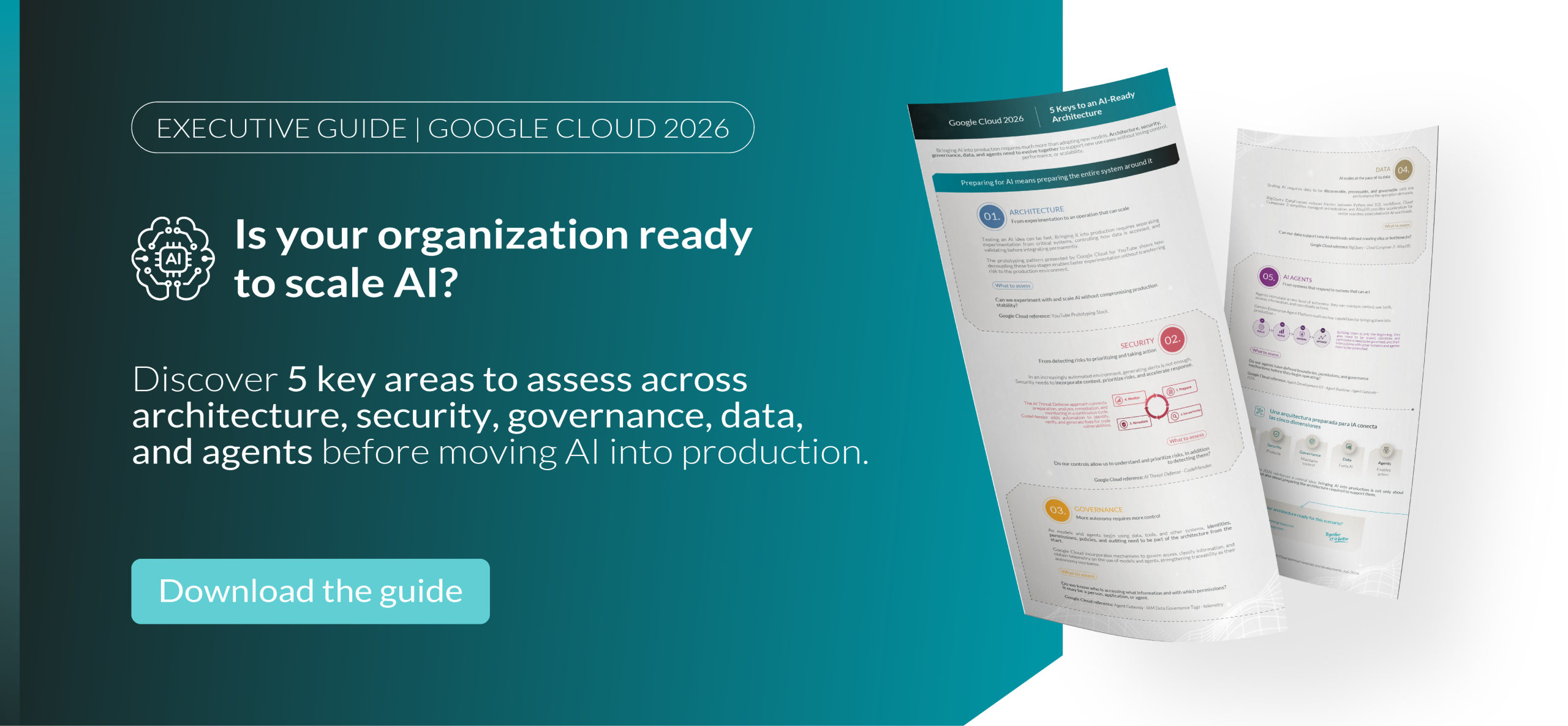

Image: AI-generated (DALL·E 3 – GPT-4o), OpenAI, 2026.
Sources consulted:
- Google Cloud. (2026a, January 28). Google Cloud Well-Architected Framework. Cloud Architecture Center. URL
- Google Cloud. (2026b, February 13). AI and ML Perspective: Performance Optimization. Cloud Architecture Center. URL
- Google Cloud. (2026c, August 26). Generative AI Security Best Practices. Google Cloud Documentation. URL
Related articles

End of support for Windows 10: risks, alternatives, and how to prepare
End of support for Windows 10 in October 2025: learn about the risks, alternatives, and how to migrate safely and efficiently in corporate environments.
Unified Access: The key to secure unified access
Unified Access enables a consistent and secure experience across wired and wireless networks. Discover how it improves connectivity, security and IT operations.